Places to visit in Paro
Bhutan’s gateway valley: Tiger’s Nest, Rinpung Dzong and the country’s only international airport.
8 places in this guide
About Paro
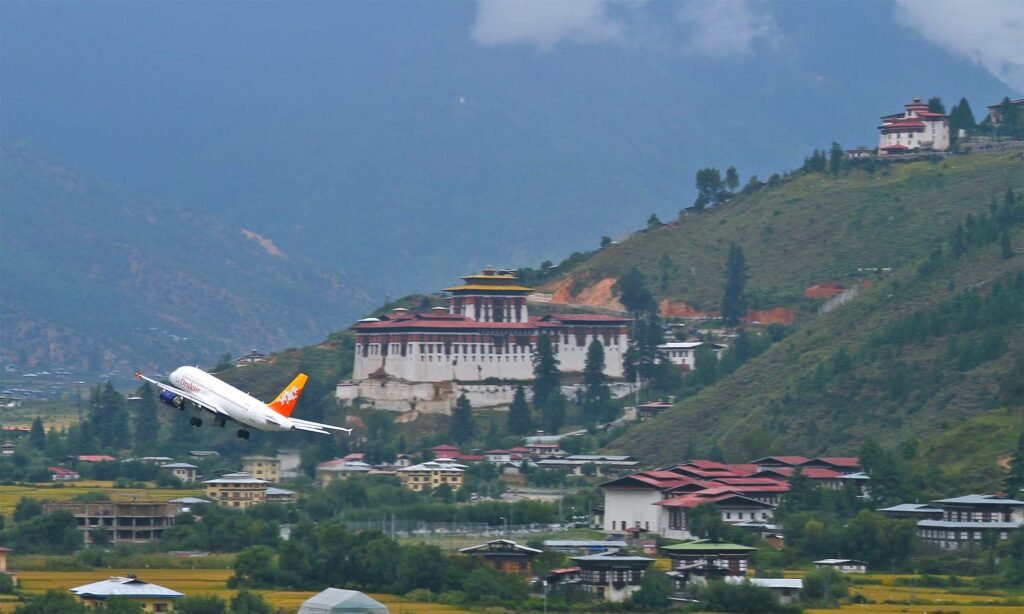
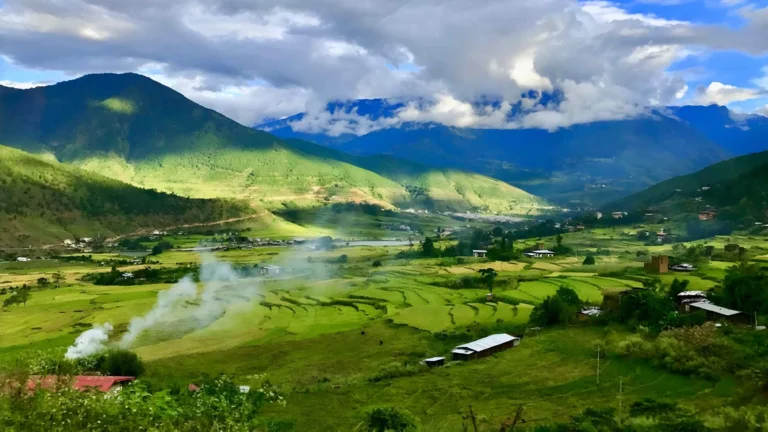
Most journeys to Bhutan begin in Paro. The country’s only international airport sits on the valley floor, and the first views on landing are of farmhouses, rice fields and the white walls of Rinpung Dzong above the Paro Chhu.
Paro rewards more than a night or two. Beyond Tiger’s Nest, the valley holds some of Bhutan’s oldest temples, the National Museum and the road over Chele La to Haa.
- RegionWestern Bhutan
- Known forTiger’s Nest, Rinpung Dzong, ancient temples
- Combine withThimphu, Haa
Temples, dzongs and museums
Taktsang Palphug Monastery (Tiger's Nest)
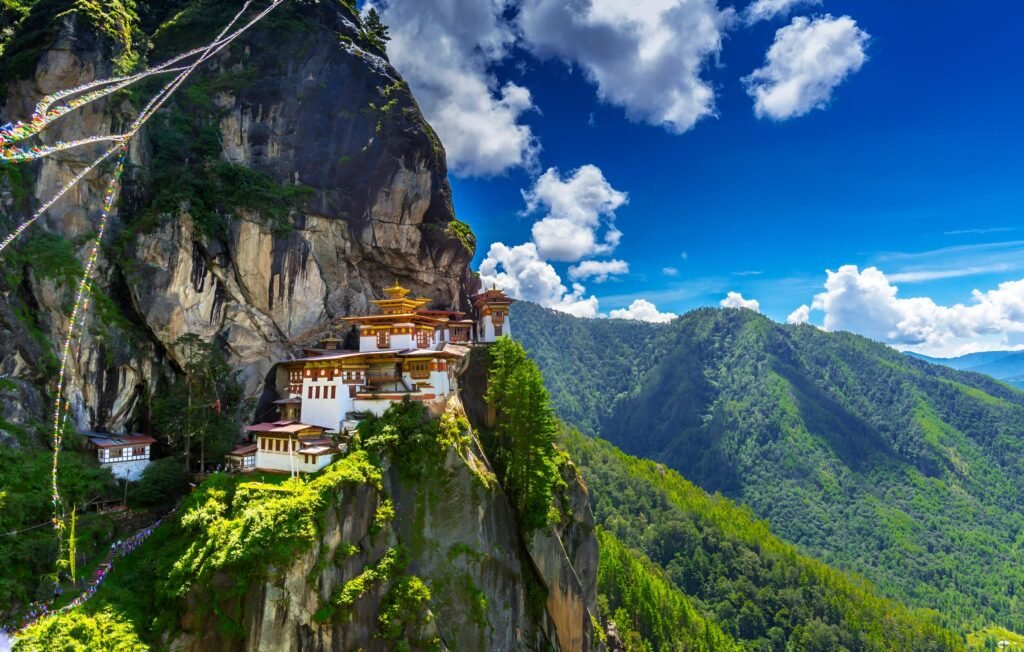
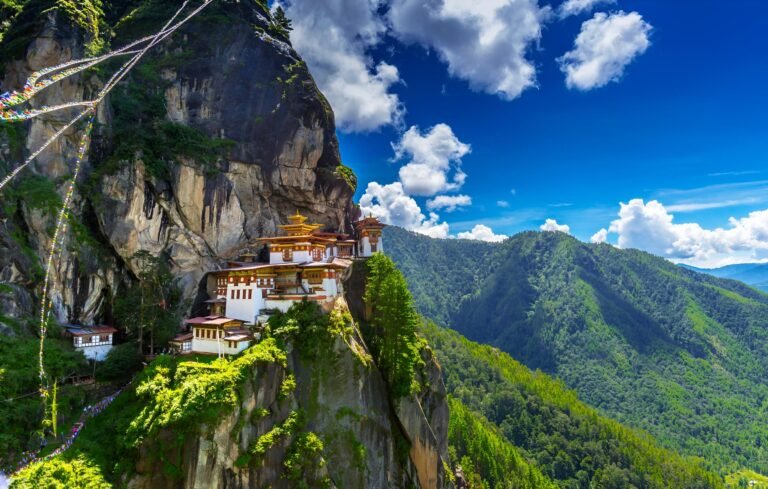
Bhutan’s most famous landmark clings to a sheer granite cliff about 900 metres above the floor of the Paro Valley, at roughly 3,120 metres. According to legend, Guru Rinpoche flew here on the back of a tigress in the 8th century and meditated in a cave that is now enclosed within the temple complex, which makes Taktsang one of the most sacred pilgrimage sites in the Himalaya. The present buildings were rebuilt after a fire in 1998.
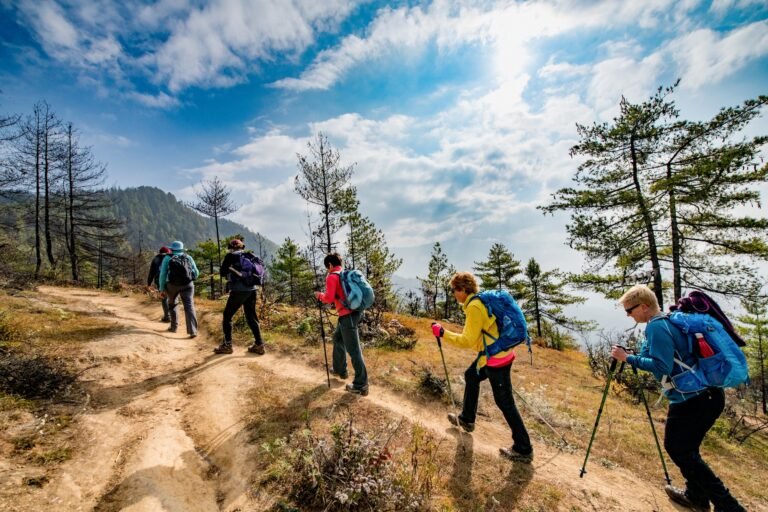
The trail climbs through blue pine forest hung with prayer flags, and most people take two to three hours to reach the monastery, with a café and viewpoint about halfway. Ponies can carry visitors part of the way up. Inside, the small temples are lit by butter lamps; photography is not permitted, and your guide will explain the shrines and their stories as you go.
Rinpung Dzong (Fortress on a Heap of Jewels)
Rinpung Dzong rises above the Paro Chhu on a hillside overlooking the town. Built in the 17th century under Zhabdrung Ngawang Namgyal, the unifier of Bhutan, it serves, like other dzongs, as both the seat of the district administration and the home of a monastic community. Its name means “fortress on a heap of jewels”.
Visitors usually approach on foot across Nyamai Zam, a traditional covered wooden cantilever bridge, and climb up to the massive whitewashed walls. Inside, galleries of carved and painted woodwork surround the courtyards, and the temples hold fine murals of Buddhist teachings and protector deities. Each spring the courtyard and the festival ground below become the setting for the Paro Tshechu, when masked dances are performed and a giant thangka is unrolled at dawn on the final day.
National Museum of Bhutan
The National Museum occupies the Ta Dzong, a round former watchtower on the ridge above Rinpung Dzong that once guarded the dzong and the valley against attack. It was converted into a museum in 1968 and introduces visitors to Bhutan’s art, history, religion and natural world in one compact visit.
The collections include thangka paintings and bronze statues, ritual objects, traditional textiles and weapons, and a gallery of festival masks that helps make sense of the dances you may see at a tshechu. Natural history displays cover the country’s wildlife, from takin to snow leopard. The terraces give a fine view down over Rinpung Dzong and the valley, and the museum makes a good first stop in Paro because it gives context to so much of what you will see later in the journey.
Kyichu Lhakhang
Kyichu Lhakhang, a short drive north of Paro town, is one of the oldest and most revered temples in Bhutan. Tradition dates it to the 7th century and attributes it to the Tibetan king Songtsen Gampo, who is said to have built a series of temples across the Himalaya to pin down a giant demoness whose body lay across the land; Kyichu is believed to hold down her left foot.
The older shrine houses an ancient statue of Jowo Shakyamuni, and a second temple was added in the 20th century. The courtyard is a place of daily devotion, where elderly residents turn the prayer wheels and circle the temple from early morning, and two orange trees in the courtyard are said to bear fruit throughout the year. It is a peaceful place to see living Bhutanese Buddhism at close quarters.
Drukgyel Dzong
Drukgyel Dzong stands at the head of the Paro Valley, about 14 kilometres from town, where the old trade and invasion route led north towards Tibet. It was built in the 17th century to commemorate Bhutan’s victories over Tibetan forces, and its name means “fortress of the victorious Drukpa”. For centuries it guarded the approach to the valley.
The dzong was badly damaged by fire in 1951 and stood as a ruin for decades; it is on Bhutan’s tentative list for UNESCO World Heritage status. On a clear day the snow peak of Jomolhari rises behind it, one of the finest views in western Bhutan. The road beyond leads to the village of Shana, starting point of the Jomolhari and Laya-Lingshi treks, so the dzong is often a stop at the beginning of those journeys.
Dumtse Lhakhang
Dumtse Lhakhang is one of the most unusual buildings in Bhutan. It was built in 1433 by Thangtong Gyalpo, the Tibetan saint and engineer remembered for his iron chain bridges, reportedly to subdue a demon. Unlike an ordinary temple, it is constructed in the form of a chorten with three storeys, which represent hell, earth and heaven, so that climbing through the building becomes a journey through Buddhist cosmology.
Its interior is known for remarkably detailed and well-preserved murals depicting deities, saints and teachings, regarded as among the finest in the country. Access is restricted, and visitors may need special permission and a torch to see inside, so ask your guide in advance whether it can be included. Even from outside, its round form stands out among the farmhouses on the western side of the Paro Chhu.
Walks and excursions
Chele La Pass
Chele La, at about 3,988 metres, is the road pass between the Paro and Haa valleys and one of the highest motorable passes in Bhutan. The drive from Paro climbs through blue pine and rhododendron forest to a ridge hung with thousands of prayer flags. On a clear morning the views extend to Jomolhari and Jichu Drake on the border with Tibet, and down into the valleys on either side.
The pass is a starting point for ridge walks of varied length, and a longer hike leads to Kila Gompa, a small nunnery built into the cliffs where nuns live in retreat. In spring the slopes are bright with rhododendrons, and in summer alpine flowers grow along the ridge. Weather changes quickly at this height, so warm layers are useful even on a sunny day, and early mornings usually give the clearest views.
Tagchog Lhakhang
Tagchog Lhakhang stands on a hillside above the Paro Chhu, on the road between Paro and Thimphu. It is a private temple associated with Thangtong Gyalpo, the 15th-century saint and bridge builder who also founded Dumtse Lhakhang, and it is still looked after by his descendants.
Visitors reach it by crossing the river on an iron chain bridge built in his traditional style, a short and memorable walk with prayer flags fluttering over the water. The temple is small and quiet, away from the main sightseeing circuit, and the crossing gives a sense of how people and pilgrims travelled in Bhutan before roads were built. It is usually visited as a brief stop on the drive between the two valleys, and your guide can tell you the stories connected with Thangtong Gyalpo and his works.
Tours that visit Paro
Bhutan Himalayan Odyssey
6 days. Paro, Thimphu and Punakha, with the hike to Tiger's Nest.
Bhutan Himalayan Journey
7 days. The western valleys, Phobjikha and Tiger's Nest.
Bhutan Heartland Journey
10 days. West to Bumthang, returning by domestic flight.
Jomolhari Trek
13 days. To Jangothang beneath Jomolhari, then over to Lingshi.
Festivals in Paro
The Paro Tshechu, held each spring in the courtyard of Rinpung Dzong, is one of Bhutan’s largest festivals. On the final morning a giant thangka is unrolled at dawn.
More in Western Bhutan
Tell us how you would like to travel
Share your dates, interests and preferred pace. We reply personally with ideas for your route and a clear quote.
Prefer to chat? WhatsApp +975 77888822