Places to visit in Trongsa
The great dzong of central Bhutan and ancestral seat of the royal family.
9 places in this guide
About Trongsa
Trongsa sits at the centre of the country, where the old east-west route crossed the deep Mangde Chhu gorge. Whoever held its dzong controlled travel across Bhutan, and the Wangchuck family governed from here as Penlops of Trongsa before becoming the country’s kings.
Most travellers stop on the way between Phobjikha and Bumthang; the dzong and museum deserve at least half a day.
- RegionCentral Bhutan
- Known forTrongsa Dzong, royal history, Mangde Chhu valley
- Combine withWangdue Phodrang, Bumthang, Zhemgang
Dzongs, palaces and monuments
Trongsa Dzong
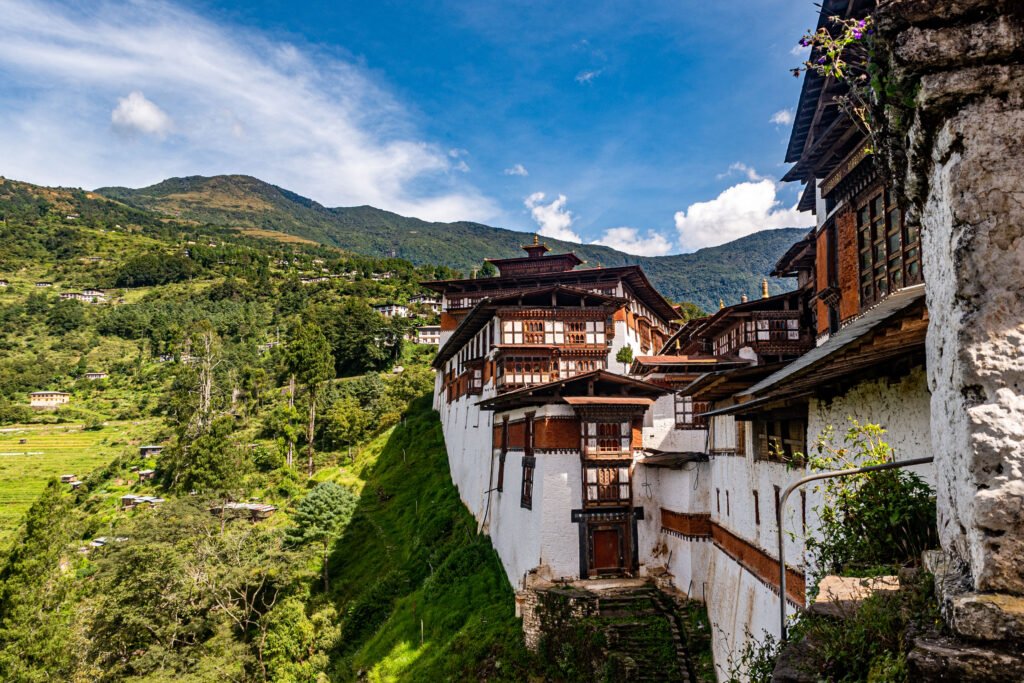
Trongsa Dzong stretches along a narrow ridge high above the gorge of the Mangde Chhu and is one of the largest and most impressive dzongs in Bhutan. The first temple on the site was founded in the 16th century, and the dzong was expanded in the 17th century under the Zhabdrung’s administration. Its position controlled the only east-west route across the country, so whoever held Trongsa held power over central and eastern Bhutan.
The Wangchuck family governed from here as Penlops (governors) of Trongsa before Ugyen Wangchuck became the first king in 1907, and by tradition the crown prince still serves as Trongsa Penlop before ascending the throne. Inside, a maze of courtyards, passageways and around two dozen temples climbs down the hillside. The annual Trongsa Tshechu is held here in winter, and the dzong’s setting above the valley is unforgettable.
Ta Dzong (Tower of Trongsa Royal Heritage Museum)
Above Trongsa Dzong stands the Ta Dzong, a round watchtower built to defend the dzong against attack. Restored with support from Austria, it now houses the Tower of Trongsa Royal Heritage Museum, which tells the story of the Wangchuck dynasty and of Trongsa’s central role in Bhutanese history.
Displays across several floors include royal memorabilia, religious artefacts, thangkas and statues, with clear explanations of how the monarchy emerged from the governors of Trongsa. The tower also contains a chapel dedicated to the epic hero Gesar of Ling. From the upper floors and the path outside, there are fine views down over the long roofs of Trongsa Dzong and the valley. Visiting the museum before the dzong gives useful context for what you will see inside, and the visit takes around an hour.
Chendebji Chorten
Chendebji Chorten stands beside the main road between Pele La and Trongsa, in a quiet valley of fields and forest. It was built in the 18th century by a lama named Shida, according to tradition to subdue an evil spirit in the area, and it is modelled on the great Swayambhunath stupa in Kathmandu, with eyes painted on all four sides.
This Nepalese style is unusual in Bhutan, where most chortens follow Bhutanese or Tibetan forms, so Chendebji is easy to recognise. A smaller Bhutanese-style chorten stands nearby. Travellers usually stop here for a short walk and a picnic or tea on the long drive from Phobjikha or Wangdue to Trongsa, and it is a peaceful place to stretch your legs. As at all chortens, walk around it in a clockwise direction.
Kuenga Rabten Palace
Kuenga Rabten Palace stands about 23 kilometres south of Trongsa, on a terrace above the Mangde Chhu valley. Built in 1929, it served as the winter residence of the second king, Jigme Wangchuck, who preferred its milder climate during the cold months.
The palace is a fine example of early 20th-century royal architecture in traditional style, with a central tower, courtyards and the former living quarters of the royal family, and part of it is now used by a community of nuns. A visit gives an insight into royal life in the decades before Bhutan’s modernisation. The drive south from Trongsa passes through farmland and forest with views over the valley, and the palace can be combined with a visit to the nearby village or a short walk in the area.
Thruepang Palace
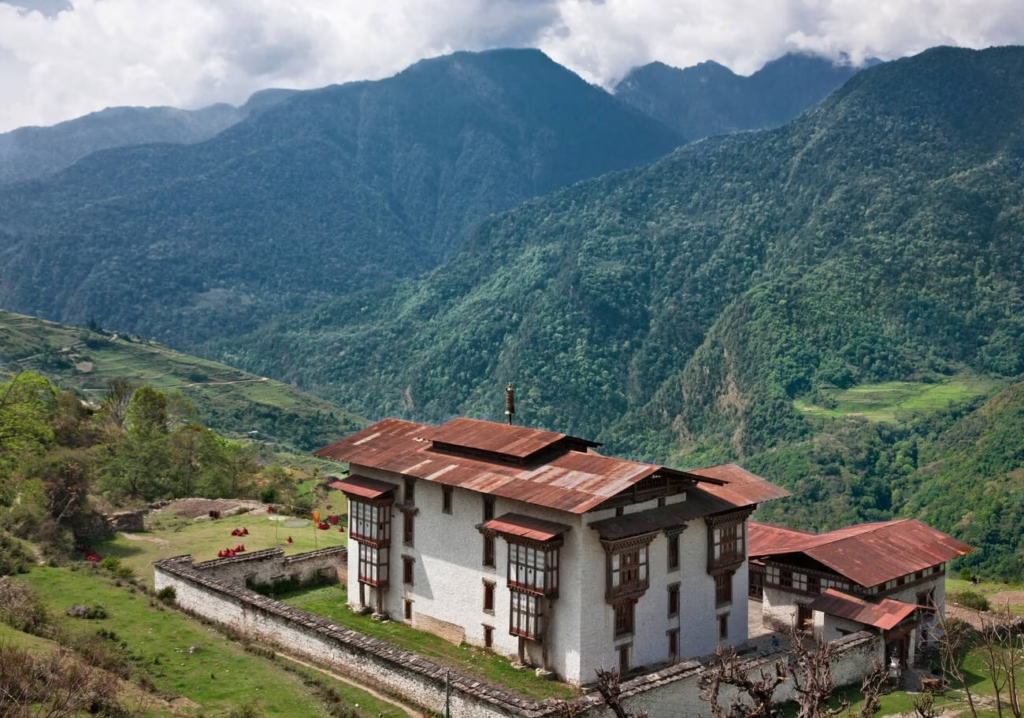
Thruepang Palace, close to Trongsa town, is the birthplace of the third king, Jigme Dorji Wangchuck, who reigned from 1952 to 1972 and is remembered as the father of modern Bhutan for beginning the country’s development and opening it to the world.
The palace is a traditional residence of modest size compared with the great dzongs, and its interior is not always open to visitors. Even so, a short stop gives a sense of the royal family’s deep connection with Trongsa and the region. Your guide can share stories about the third king’s reforms, including the founding of the National Assembly and the abolition of serfdom, which help explain how Bhutan moved from a feudal system towards the country visitors see today.
Walks and nature
Trongsa town walks
The original website describes a moderate walk of around two hours connecting Trongsa Dzong with surrounding villages through forest and farmland, with views of the dzong and opportunities to see local farming and birdlife.
Trongsa town itself is small, perched on the hillside facing the dzong across the gorge, and short walks from the town lead to fine viewpoints. Paths around the area pass fields, farmhouses and patches of broadleaf forest, where a variety of birds can be seen. Routes vary, and some are steep, so ask your guide to suggest a walk that suits your fitness and the time available. An evening stroll to the viewpoint opposite the dzong, when its walls catch the last light, is one of the simplest pleasures of a night in Trongsa.
The Black Mountains
The Black Mountains are the range that divides western Bhutan from central Bhutan, crossed by the road at Pele La. Much of the range lies within Jigme Singye Wangchuck National Park, one of Bhutan’s largest protected areas, which spans broadleaf and conifer forests, alpine pastures and high peaks.
The park is a stronghold of biodiversity, home to animals such as the red panda, Himalayan black bear and tiger, and to a rich variety of birds, although large mammals are rarely seen. Villages within and around the park keep traditional lifestyles, including herding and farming communities. Treks into the Black Mountains pass through old forest and high meadows and are best in spring and autumn. They are less visited than the classic western treks, and must be planned with a licensed operator and guide.
Fishing
Fishing on the Mangde Chhu
The Mangde Chhu flows south from the mountains past Trongsa towards Zhemgang and the Indian border, carving the deep gorge below the dzong. The original website notes that it holds snow trout and suggests October to November and March to April as the best seasons for fishing.
Fishing in Bhutan is regulated and requires a permit arranged in advance, and it is not allowed on certain religious days or in protected stretches. Catch-and-release is encouraged. A local fishing guide can take you to accessible stretches of the river, some reached by short walks from the road, where the setting of forested slopes and quiet water makes for a peaceful outdoor day. Tell us in advance if you would like to fish, so that the permit and guide can be arranged.
Combined cultural and fishing days
For travellers who would like to combine sightseeing with time on the river, the original website describes days that pair visits to Trongsa’s cultural sites with angling on nearby rivers, together with traditional meals and historical explanations from a local guide.
A typical day might begin with Trongsa Dzong and the Ta Dzong museum in the morning, when the light on the dzong is best, followed by an afternoon of fishing on a quiet stretch of river. Because permits, river conditions and access vary, these days are planned individually rather than offered as fixed packages. Let us know your interests when you enquire, and we will confirm what is realistic for your travel dates and arrange the necessary fishing permit and guide.
Tours that visit Trongsa
Bhutan Heartland Journey
10 days. West to Bumthang, returning by domestic flight.
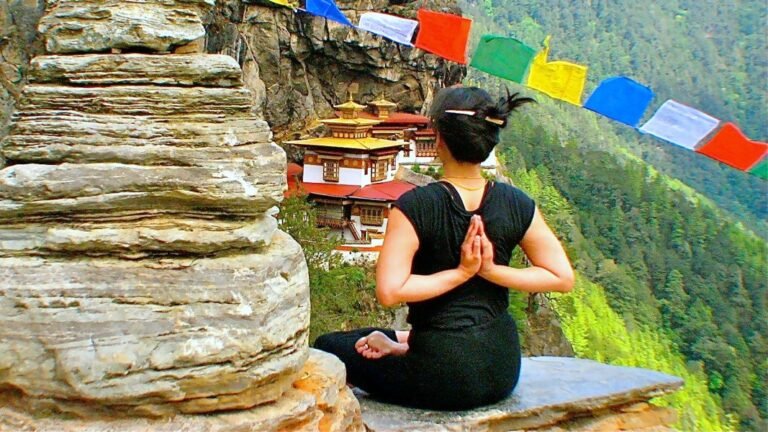
The Dragon Kingdom's Complete Journey
12 days. Across the country to Trashigang in the east.
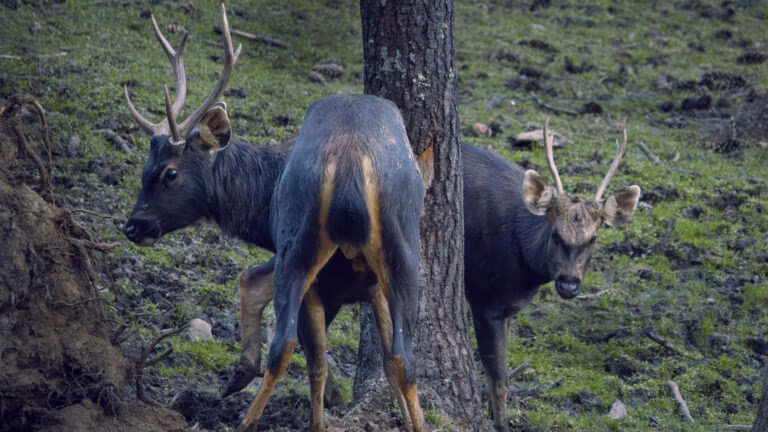
Bhutan Nature and Wildlife Tour
Phobjikha, Bumthang and Royal Manas National Park.
More in Central Bhutan
Tell us how you would like to travel
Share your dates, interests and preferred pace. We reply personally with ideas for your route and a clear quote.
Prefer to chat? WhatsApp +975 77888822