
Places to visit in Wangdue Phodrang
Gateway to central Bhutan and home to the Phobjikha Valley, winter refuge of the black-necked crane.
9 places in this guide
About Wangdue Phodrang
Wangdue Phodrang links western and central Bhutan, and covers a wide range of landscapes from warm river valleys to high pasture. For most travellers its highlight is the Phobjikha Valley, a protected glacial basin where black-necked cranes spend the winter.
- RegionWestern Bhutan
- Known forPhobjikha Valley, black-necked cranes, Gangtey Monastery
- Combine withPunakha, Trongsa
Places to see
Phobjikha Valley (Gangtey)
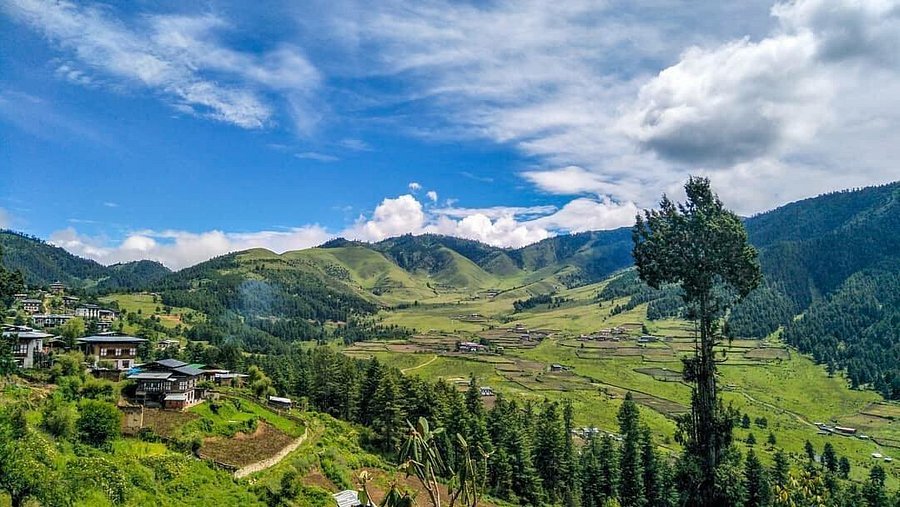
Phobjikha is a broad, bowl-shaped glacial valley on the western slopes of the Black Mountains, at around 2,900 metres, and one of the most beautiful landscapes in Bhutan. The valley floor is a wetland surrounded by pine-forested hills, with scattered farmhouses and fields of potatoes and turnips, and much of it is protected as a conservation area.
From late October to February, endangered black-necked cranes migrate here from the Tibetan plateau to spend the winter, and the valley’s people celebrate their arrival with the Black-necked Crane Festival at Gangtey Monastery on 11 November. A crane information centre run by the Royal Society for Protection of Nature explains their ecology. To protect the cranes, the valley has avoided overhead power lines. It is a peaceful place to walk, watch birds and enjoy village life.
Gangtey Monastery
Gangtey Goemba stands on a forested ridge overlooking the Phobjikha Valley. Founded in the 17th century by a descendant of the treasure revealer Pema Lingpa, it is one of the most important monasteries of the Nyingma school in western Bhutan, and the seat of the Gangtey Tulku.
The monastery was extensively restored in the early 2000s using traditional methods, and its central tower and courtyard are surrounded by the homes of lay monks and their families. Visitors can see the main temple with its statues and murals, and may hear monks at prayer in the morning or evening. The monastery is the setting for the Black-necked Crane Festival each November, and its position at the head of the valley makes it the natural starting point for the Gangtey Nature Trail.
Wangdue Phodrang Dzong
Wangdue Phodrang Dzong stands on a high ridge above the confluence of the Punatsang Chhu and Dang Chhu, south of Punakha. It was founded in 1638 by Zhabdrung Ngawang Namgyal, and its commanding position made it strategically important for controlling routes between western, central and southern Bhutan.
In 2012 the dzong was badly damaged by fire. It has since been rebuilt using traditional methods and materials, a long project that showcased Bhutanese craftsmanship in carpentry, stonework and painting. Today it again serves as the seat of the district administration and the monastic community. The views from the ridge over the rivers and the surrounding hills are wide, and the dzong is easily visited on the way between Punakha and Phobjikha or central Bhutan.
Rinchengang village
Rinchengang is a compact traditional village on the hillside opposite Wangdue Phodrang Dzong, across the Dang Chhu. Its houses, built closely together of stone and rammed earth, climb the slope in tiers, and it is one of the oldest settlements in the area.
The village is known for its tradition of skilled stonemasons and builders; local accounts say that its people were brought to the area to help build the dzong in the 17th century. Walking up through the narrow lanes, visitors can see traditional construction techniques, small gardens and family shrines, and enjoy views back over the dzong and the river valley. The walk from the road takes around 20 to 30 minutes and is a good way to stretch your legs and meet villagers during the drive between western and central Bhutan.
Adha village
Adha is a remote village area in Wangdue Phodrang district, reached by rough road and on foot. The original website describes a hike through forest and traditional villages to natural hot springs, believed locally to have healing properties, and a quiet experience of rural life far from the main tourist routes.
Hot springs, or tshachu, are highly valued in Bhutan, and families travel long distances to bathe in them during the winter months. Villages in this part of Wangdue keep traditional farming lifestyles, with fields of rice and maize, and visitors are rare. We are checking current details of access and facilities for this area before recommending it, so please ask us if you are interested and we will confirm what is possible for your travel dates.
Walks
Gangtey Nature Trail
The Gangtey Nature Trail is one of the loveliest easy walks in Bhutan. It begins near Gangtey Monastery and descends gently over about two hours through pine forest, open meadows and farmland to the small temple of Khewa Lhakhang on the valley floor.
The trail passes through bamboo thickets and fields where farmers grow potatoes, the area’s main cash crop, and offers wide views across the wetland. In winter, black-necked cranes can often be seen feeding in the marshes below, and the trail avoids disturbing their roosting areas. It is suitable for all fitness levels, and a good way to experience the valley’s landscape and village life at walking pace. Many travellers end the walk with a visit to the crane information centre.
Phobjikha Valley circuit
Longer walks around the Phobjikha Valley allow more time to explore its villages, forests and wetland edges than the shorter Gangtey Nature Trail. The original website describes a moderate full-day circuit around the valley, with several points for observing cranes and other birds.
Beyond the black-necked cranes in winter, the valley and its surrounding forests are home to birds such as pheasants and various migratory waterbirds, and the walk passes traditional farmhouses where villagers grow potatoes and raise cattle. Local guides can explain community conservation efforts that balance farming with protecting the cranes’ habitat. Routes can be adjusted to your interests and fitness, and in winter it is important to keep a respectful distance from the cranes and to follow the guidance of the conservation centre.
Fishing
Fishing on the Punatsang Chhu
The Punatsang Chhu, which flows from Punakha down through Wangdue Phodrang, is one of the larger rivers in western Bhutan. The original website notes that it holds snow trout and mahseer, and suggests October to November and March to April as the most suitable seasons for angling.
Fishing in Bhutan requires a permit, which must be arranged in advance through your tour operator, and it is not permitted on certain religious days or in protected stretches. Catch-and-release is encouraged. A local fishing guide can take you to accessible stretches of the river, from gentle banks near the road to quieter spots reached by short walks. Fishing combines well with the drive between Punakha and central Bhutan, but it should be planned ahead so the permit is ready.
Combined fishing and hiking days
For keen anglers with a taste for walking, the original website describes combined days that pair hiking with fishing on quieter stretches of Wangdue Phodrang’s rivers, away from the main roads and settlements.
A day of this kind might begin with a walk through forest or farmland to a riverside spot chosen by a local guide, followed by a few hours of fishing and a simple meal by the river. Because fishing permits, river conditions and access vary, these days are always planned individually. Tell us about your experience and interests when you enquire, and we will confirm what is realistic for your travel dates and arrange the necessary permit and guide, so that the day fits naturally into the rest of your itinerary.
Tours that visit Wangdue Phodrang
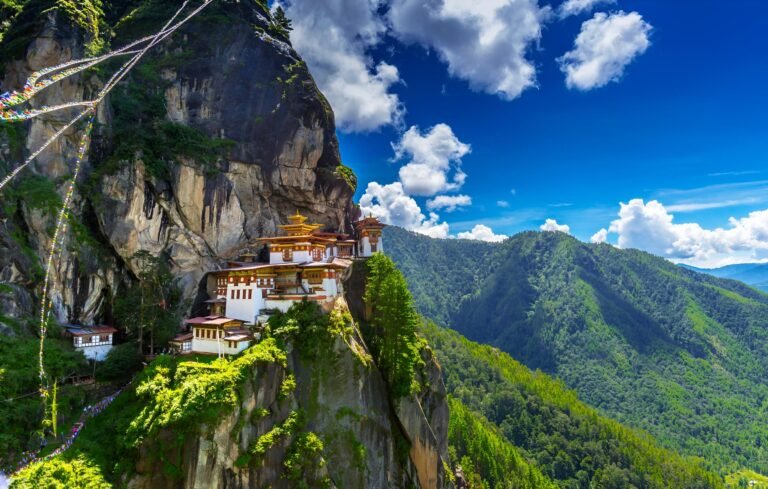
Bhutan Himalayan Journey
7 days. The western valleys, Phobjikha and Tiger's Nest.
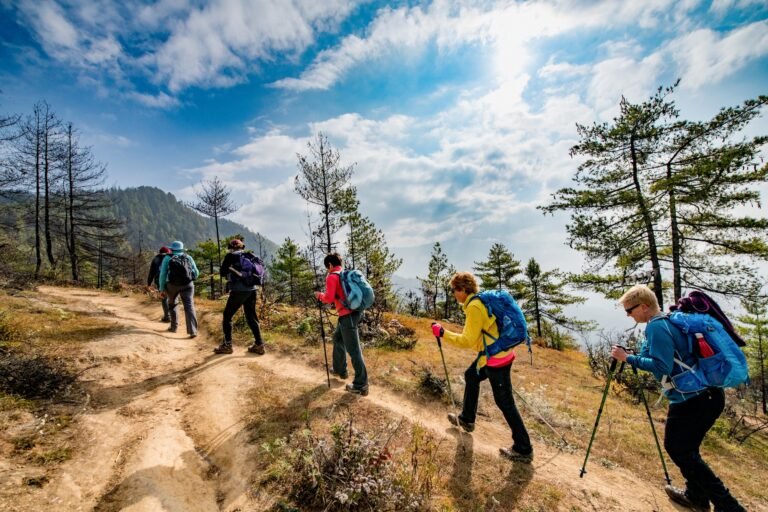
The Ultimate Himalayan Journey
8 days. Western Bhutan with an overnight camp on the Bumdra trek.
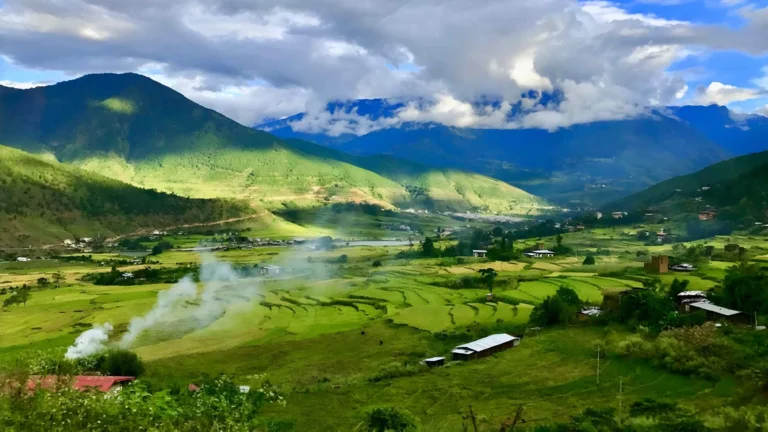
Bhutan Heartland Journey
10 days. West to Bumthang, returning by domestic flight.
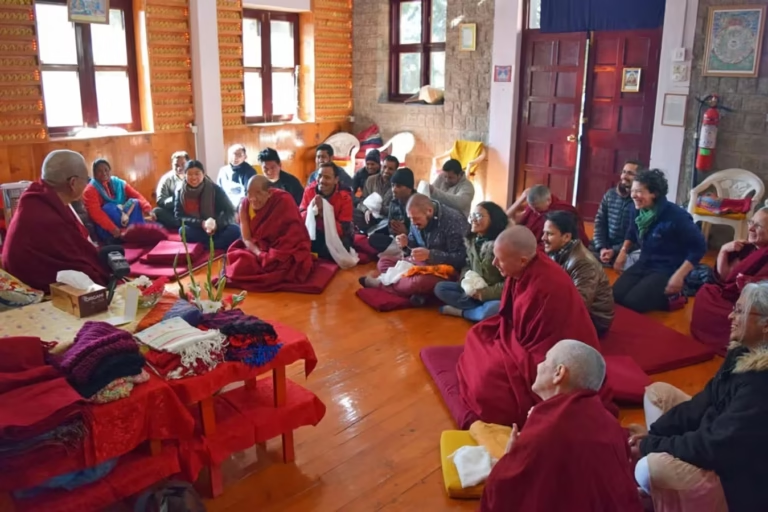
Bhutan Spiritual and Wellness Retreat
10 days. Meditation, temples and Phobjikha, ending at Tiger's Nest.
Festivals in Wangdue Phodrang
Each year on 11 November, the Black-necked Crane Festival at Gangtey Monastery celebrates the birds’ return with dances by local schoolchildren and villagers.
More in Western Bhutan
Tell us how you would like to travel
Share your dates, interests and preferred pace. We reply personally with ideas for your route and a clear quote.
Prefer to chat? WhatsApp +975 77888822