
Places to visit in Thimphu
A capital of temples, markets and museums, famous for having no traffic lights.
15 places in this guide
About Thimphu
Thimphu fills a long valley at around 2,300 m and is one of the few capitals in the world without traffic lights. Monks, office workers and schoolchildren in national dress share the streets, and the city’s temples and museums make it the best place to understand how Bhutan lives today.
Most itineraries spend a day or two here, often adding a hike to one of the monasteries on the surrounding ridges.
- RegionWestern Bhutan
- Known forBuddha Dordenma, Tashichho Dzong, museums and markets
- Combine withParo, Punakha
In the city
Buddha Dordenma
The Buddha Dordenma statue sits on the hill of Kuensel Phodrang above the southern end of Thimphu, overlooking the valley. Made of bronze and gilded, it stands about 51 metres tall, making it one of the largest seated Buddha statues in the world. The statue was completed in the 2010s and the site was consecrated in 2015.
Inside, the hall beneath the statue holds around 125,000 smaller Buddha images. The broad terrace around it offers some of the best views over the city and the Wang Chhu valley, especially in the soft light of early morning or late afternoon. The surrounding Kuensel Phodrang nature park has walking trails through pine forest, and the site is also the starting point for the walk to Wangditse Lhakhang. Visitors should dress respectfully, as it is an active place of devotion.
Tashichho Dzong
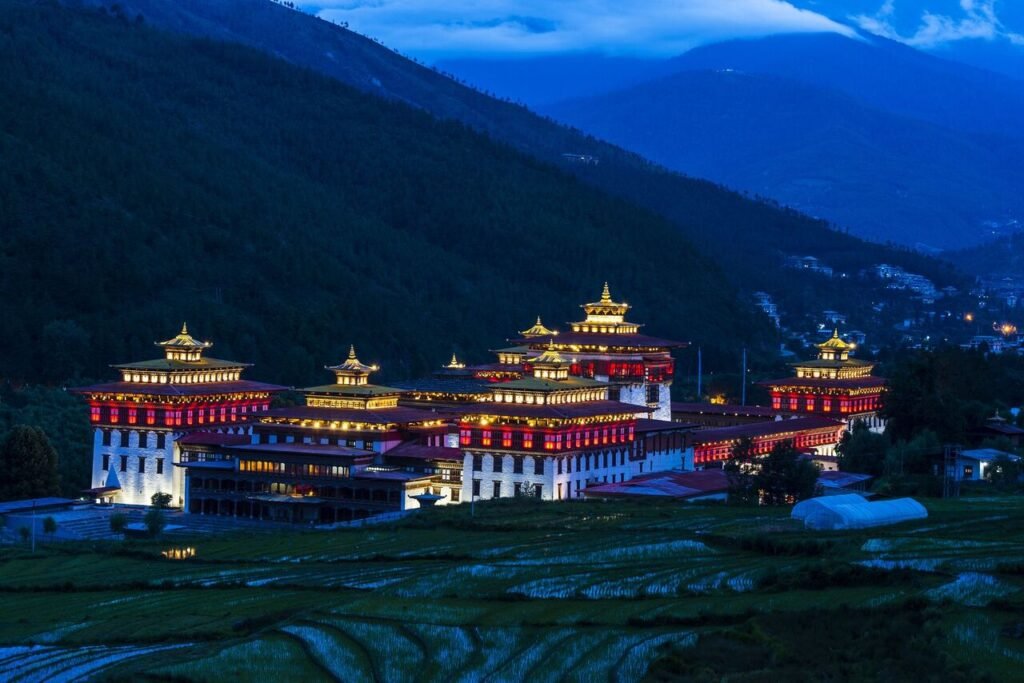
Tashichho Dzong stands on the west bank of the Wang Chhu at the northern edge of Thimphu. It houses the throne room and offices of the King, several government ministries, and is the summer residence of the Je Khenpo and the central monastic body, which moves here from Punakha for the warmer months. The present building was largely rebuilt in traditional style in the 1960s, when Thimphu became the capital.
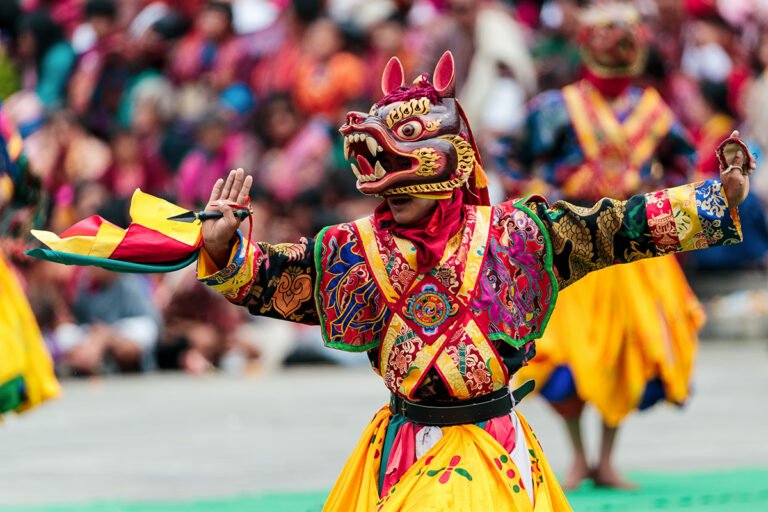
Visitors may enter the courtyard and main temple outside office hours, usually in the late afternoon, with their guide. The scale of the whitewashed walls, the carved woodwork and the peaceful gardens around the dzong make it one of the most impressive buildings in the country, and it is beautifully lit at night. Each autumn the Thimphu Tshechu takes place in and beside the dzong.
National Memorial Chorten
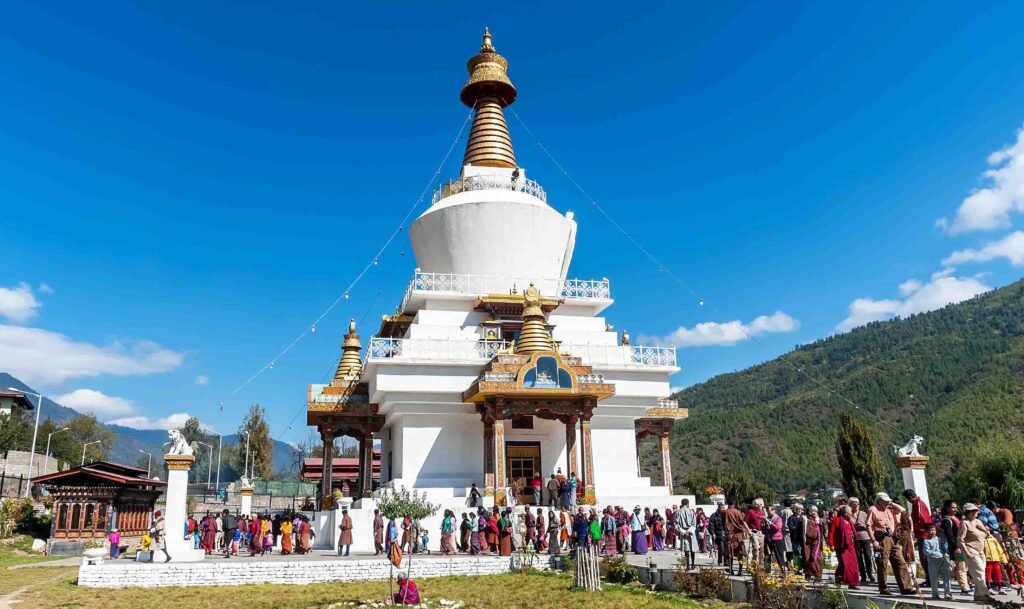
The National Memorial Chorten, in the centre of Thimphu, was built in 1974 in memory of the third king, Jigme Dorji Wangchuck. Its whitewashed dome and golden spire make it one of the city’s best-known landmarks, but it is above all a place of everyday devotion.
From early morning until evening, residents of all ages walk clockwise around the chorten, turn the large prayer wheels and recite prayers, many of them elderly people who come here every day. Visitors are welcome to join the circumambulation, and it is one of the best places in Bhutan to watch living Buddhist practice in a relaxed, unhurried setting. Inside are shrines with images of deities. It is a good place to visit early in your trip, and to return to at the end of a day, when the courtyard is at its busiest.
Motithang Takin Preserve
The Motithang Takin Preserve, on the hillside above Thimphu, is a forested enclosure where visitors can see the takin, Bhutan’s national animal. The takin is an unusual heavy-set animal, related to goats and antelopes, that lives in the high forests and meadows of the eastern Himalaya.
A well-known legend tells that the animal was created by Drukpa Kunley, the Divine Madman, who was asked to perform a miracle and assembled it from the head of a goat and the skeleton of a cow. The preserve began after a small zoo was closed and the animals were found to be unable to survive outside. It is a quiet visit of half an hour or so, popular with families, and the walk along the fence line gives good views over the valley.
Centenary Farmers' Market (weekend market)
Thimphu’s weekend market, the Centenary Farmers’ Market, sits beside the Wang Chhu near the centre of town. From Thursday or Friday to Sunday, farmers from across the region bring their produce, and the covered hall fills with piles of red and green chillies, vegetables, red rice, dried fish and the hard yak cheese known as chugo.
It is a colourful and lively place to see what Bhutanese families cook and eat, and your guide can explain unfamiliar ingredients, from fern shoots to datshi cheese, the basis of the national dish ema datshi. Across the traditional cantilever footbridge over the river, a handicraft section sells textiles, prayer wheels, masks and souvenirs. Mornings are usually the busiest and most atmospheric time to visit, and photography is generally welcome if you ask the stallholders first.
National Folk Heritage Museum
The National Folk Heritage Museum is housed in a restored traditional three-storey farmhouse in Thimphu. It is furnished as a rural home would have been in the past, giving a clear picture of how Bhutanese families lived and worked before modern development reached the valleys.
Rooms display household utensils, tools, weapons and religious objects, and the ground floor shows where animals were kept beneath the living quarters. The grounds include a traditional water mill and gardens of heritage crops, and the museum sometimes offers demonstrations of rural skills and traditional meals. It complements the National Museum in Paro by focusing on daily life rather than art and history, and it is especially worthwhile for travellers who will not have time to visit a working farmhouse in the countryside.
Simply Bhutan
Simply Bhutan is a living museum and cultural centre in Thimphu, run as a social project that employs young people as guides and performers. It is designed to be hands-on rather than a collection behind glass.
Visitors walk through a reconstructed traditional village setting, learn how houses are built with rammed earth, try traditional archery, Bhutan’s national sport, and can dress in the gho or kira. The visit often includes a taste of local drinks and snacks and a short performance of folk songs and dances. It is lively and informal, and works well for families and first-time visitors who want an introduction to everyday Bhutanese customs in an afternoon. Your guide can tell you more about the traditions you see, and about how many of them are still practised in villages today.
Changangkha Lhakhang
Changangkha Lhakhang is one of the oldest temples in Thimphu, built in the 12th century on a ridge above the city by a lama of the Drukpa lineage. Its fortress-like form and its position overlooking the valley make it a landmark, and steps lead up past rows of prayer wheels.
The temple is dedicated to Avalokiteshvara, the bodhisattva of compassion, and holds a special place in local family life: parents bring their newborn children here to receive blessings and names from the resident lama. It is a busy, everyday place of worship rather than a monument, and visitors can watch people making offerings, lighting butter lamps and circling the building. From the courtyard there are views over the city towards Tashichho Dzong. It combines well with the nearby Takin Preserve.
Jungshi Handmade Paper Factory
The Jungshi Handmade Paper Factory in Thimphu preserves the traditional craft of Bhutanese paper making, known as desho. The paper is made from the bark of the daphne plant, which is boiled, beaten into pulp and formed into sheets on wooden frames before being pressed and dried.
Visitors can watch each stage of the process and the craftspeople at work. The strong, long-lasting paper has traditionally been used for Buddhist texts and prayer flags, and today it is also made into cards, notebooks, lampshades and gift wrapping that can be bought on site. It is a short and interesting visit that shows how a centuries-old skill is being kept alive, and it makes an easy stop combined with the Folk Heritage Museum and other sights in the town.
Zilukha Nunnery
Zilukha Nunnery stands on a hillside in Thimphu, above Tashichho Dzong and the Wang Chhu. It is one of the few nunneries in the capital and is home to a community of Buddhist nuns who live, study and practise here.
The nunnery was founded in connection with Drubthob Thangtong Gyalpo’s tradition and is sometimes called Drubthob Goemba. Visitors are welcome to visit respectfully with their guide, and may be able to observe prayers or speak with the nuns, which offers a different perspective on monastic life in Bhutan. The temple contains murals and statues, and the courtyard gives fine views over Tashichho Dzong and the valley. It is a quiet visit, best fitted in during the morning or late afternoon when the nuns are at prayer.
Hikes and excursions
Dochula Pass
Dochula, at about 3,100 metres, is the pass on the road from Thimphu to Punakha, roughly 30 kilometres east of the capital. It is crowned by the 108 Druk Wangyal chortens, built under the patronage of the Queen Mother to commemorate Bhutanese soldiers after military operations in 2003, and by the Druk Wangyal Lhakhang temple beside them.
On clear days, most often between October and March, the pass offers a panorama of Himalayan peaks along the northern horizon, including Masanggang and other summits of the Gasa and Lunana region. Prayer flags, rhododendron forest and the rows of chortens make it one of the most photographed places in Bhutan. Most journeys stop here for tea and a short walk on the way to Punakha, and the Druk Wangyal Festival is held at the pass each December.
Tango and Cheri Monasteries
Tango and Cheri are two important monasteries in the hills at the northern end of the Thimphu valley, about 14 kilometres from the city. Both are reached on foot along forest trails from the road head.
Tango Goemba, about an hour’s uphill walk, is an important centre of Buddhist learning; its site is associated with the 13th-century lama Phajo Drugom Zhigpo, and the present monastery dates from the 17th century. Cheri Goemba, across the valley, was founded in 1620 by Zhabdrung Ngawang Namgyal and was the first monastery he established in Bhutan. The trail to Cheri crosses a covered bridge over the Wang Chhu and climbs through forest where goral and monkeys are sometimes seen. Allow most of a day to visit both, with a picnic lunch.
Wangditse Lhakhang walk
The walk to Wangditse Lhakhang follows the forested ridge above the western side of Thimphu, linking the Buddha Dordenma site with Wangditse temple and continuing towards the area above Tashichho Dzong. It is a moderate walk of around two to three hours, depending on the route chosen.
The path passes through blue pine forest hung with prayer flags and offers some of the widest views over the city and the Wang Chhu valley, with Tashichho Dzong and the government buildings laid out below. Wangditse Lhakhang is a small temple founded in the early 18th century, quiet and rarely crowded. The walk needs no special equipment beyond good shoes and water, and it is a good way to stretch your legs and acclimatise on the first days of a journey before longer hikes such as Tiger’s Nest.
Phajoding Monastery hike
Phajoding is a monastery complex on the mountainside above Thimphu, at over 3,600 metres. It has long been a place of meditation and retreat, with temples and retreat houses scattered across the slope, and it is associated with the 13th-century lama Phajo Drugom Zhigpo, who brought the Drukpa lineage to Bhutan.
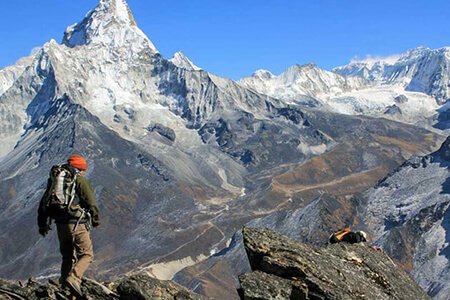
The climb from the road above Thimphu is steep, rising about 1,000 metres through dense blue pine and rhododendron forest, and takes most walkers three to four hours up. The reward is a quiet monastic setting and wide views over the valley and the mountains beyond. It is a demanding day hike that suits fit walkers, and Phajoding is also the first overnight stop on the Druk Path Trek, which continues past high lakes towards Paro.
Serbithang and the Royal Botanical Garden area
Serbithang, on the southern edge of the Thimphu valley, is home to the Royal Botanical Garden, which displays a wide range of Bhutanese plants, including rhododendrons, in a landscaped setting with paths and quiet picnic spots. It is a gentle place to spend an hour or two away from the city traffic.
The original website described a two-hour nature trail from Serbithang towards the cliff hermitage area of Thujidrag, suitable for birdwatching and walking through mixed conifer and rhododendron forest. The garden and the forests around it are good for birds, and spring brings rhododendron and wildflower blooms. Ask your guide for the current condition and length of walking routes in the area, as trails and access can change, and combine the visit with a drive along the valley.
Tours that visit Thimphu
Bhutan Himalayan Odyssey
6 days. Paro, Thimphu and Punakha, with the hike to Tiger's Nest.
Bhutan Heartland Journey
10 days. West to Bumthang, returning by domestic flight.
Druk Path Trek and Cultural Immersion
9 days. The Druk Path from Thimphu to Paro past high lakes.
Thimphu Tshechu Festival Tour 2027
8 days. Timed to the Thimphu Tshechu.
Festivals in Thimphu
The Thimphu Tshechu fills the courtyard of Tashichho Dzong each autumn with masked dances and crowds in their finest clothes.
More in Western Bhutan
Tell us how you would like to travel
Share your dates, interests and preferred pace. We reply personally with ideas for your route and a clear quote.
Prefer to chat? WhatsApp +975 77888822