
Tours / Nature and wildlife
Bhutan Nature and Wildlife Conservation Tour
A long journey through Bhutan’s protected areas, from Phobjikha to Royal Manas National Park.
Trip at a glance
- StartsParo
- Main stopsParo, Thimphu, Punakha, Phobjikha, Trongsa, Bumthang
- Travel styleNature and wildlife
- DifficultyEasy
- Best seasonOctober to May
Overview
More than two thirds of Bhutan is forested, and conservation is written into its constitution. This journey travels through the country’s protected areas, from the crane wetlands of Phobjikha and the highlands of Bumthang to the subtropical forests of Royal Manas National Park, home to elephants and golden langurs.
It is designed for nature lovers, birdwatchers and photographers, with cultural highlights along the way.
Why travellers choose this journey
- Bhutan’s national parks and protected landscapes in one journey
- Meet rangers and local conservationists
- Your visit supports community-based conservation
Highlights
Black-necked cranes in the Phobjikha Valley (in winter)
Royal Manas National Park, Bhutan’s oldest protected area
Forest walks near Thimphu
Bumthang’s temples and highland valleys
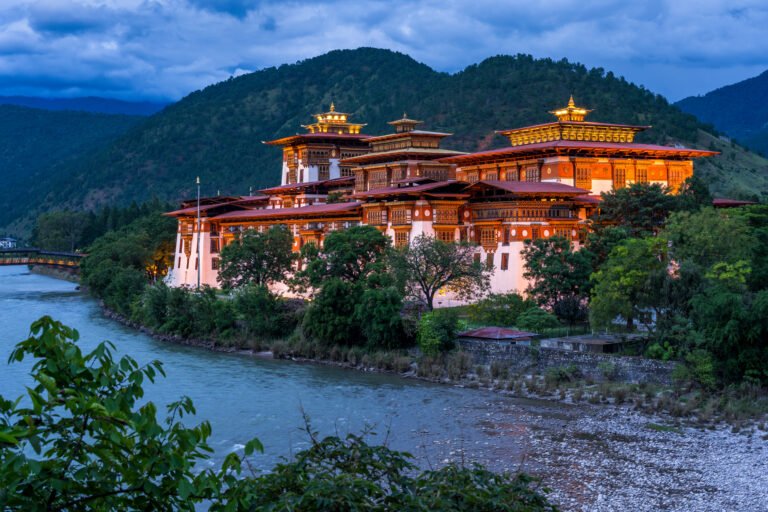
Tiger’s Nest, Punakha Dzong and Buddha Dordenma
- Paro
- Thimphu
- Punakha
- Phobjikha
- Trongsa
- Bumthang
- Zhemgang
- Gelephu
- Trongsa
- Paro
Day by day
The full itinerary, day by day. Every journey is private, so we can adjust the pace, hotels and stops to suit you.
Day01
OvernightParo
Arrive in Paro (2,280 m)
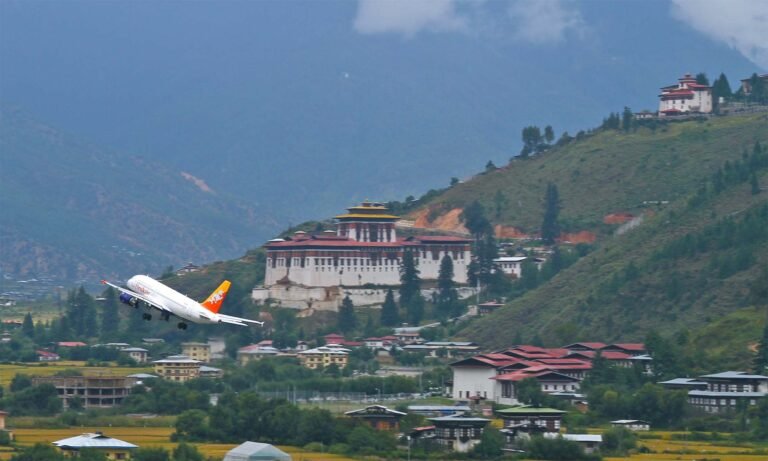
Arrive at Paro International Airport, enjoying majestic mountain views on the approach if the weather is clear, as the aircraft descends between forested ridges to land beside the river and rice fields. Your guide meets you outside the terminal, and after settling into your hotel you begin exploring the Paro Valley at an easy pace, which also helps you adjust to the altitude.
Visit Kyichu Lhakhang, one of Bhutan’s oldest temples, traditionally dated to the 7th century, where elderly residents circle the temple and turn its prayer wheels throughout the day. Then visit Rinpung Dzong, the 17th-century fortress on the hillside above the Paro Chhu, reached across a traditional covered wooden bridge. In the evening, stroll through Paro town, where the main street is lined with painted wooden shopfronts, handicraft shops and small cafés, and meet your guide to talk through the days ahead.
Day02
OvernightThimphu
Paro to Thimphu: the modern capital
Drive to Thimphu, Bhutan’s dynamic capital, about an hour and a half from Paro. On the way, stop at Tamchog Lhakhang, the Iron Bridge Temple, associated with the 15th-century saint and bridge builder Thangtong Gyalpo and reached across the Paro Chhu on a traditional iron chain bridge hung with prayer flags.
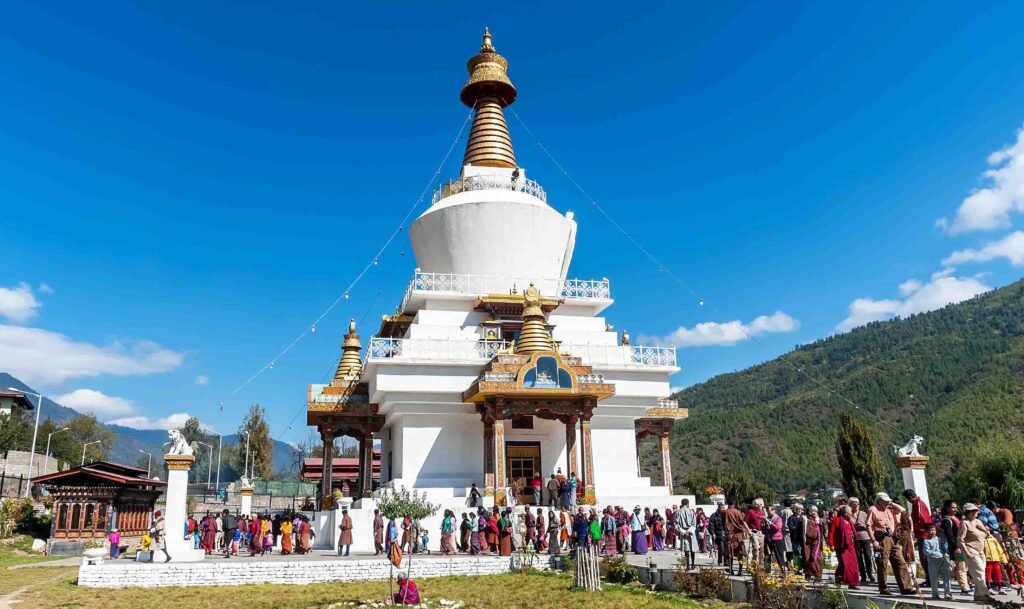
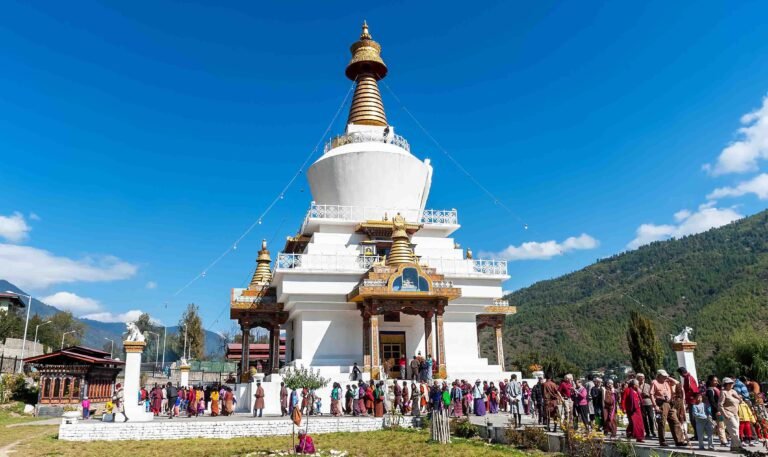
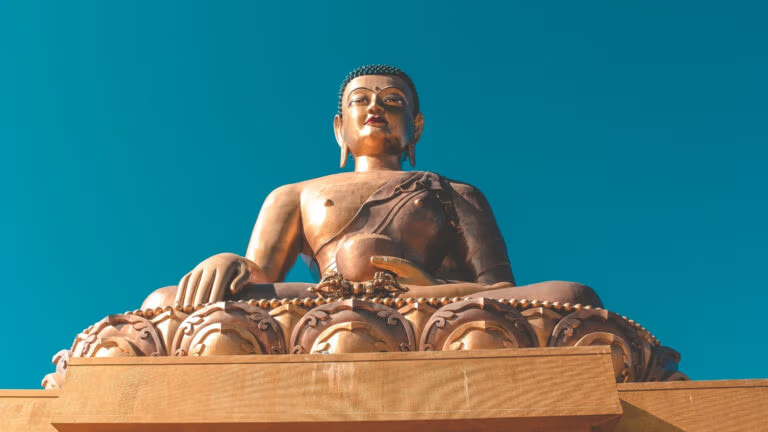
In Thimphu, visit the Buddha Dordenma, the gilded statue around 51 metres tall that overlooks the valley from the hill of Kuensel Phodrang, and the National Memorial Chorten, built in 1974 in memory of the third king, where residents walk and pray from morning until evening. Later, explore Thimphu’s craft markets, browsing handwoven textiles, masks, prayer wheels and other handicrafts, and enjoy the lively atmosphere of the capital in the evening.
Day03
OvernightThimphu
Thimphu: excursion into Jigme Dorji National Park
Take a day trip from Thimphu into Jigme Dorji National Park, one of Bhutan’s largest protected areas, which stretches north from the Thimphu valley to the glaciers and high peaks along the Tibetan border and protects the headwaters of several major rivers.
Explore the forests at the southern edge of the park with your guide, walking through stands of fir, birch and rhododendron, and look for wildlife such as the red panda and birds including the Himalayan monal, the colourful pheasant of the high forests. Blue sheep live on the higher slopes of the park. Sightings of shy animals are never guaranteed, but the forests are rich in birds, and your guide can explain the park’s importance for species such as the takin and snow leopard. Return to Thimphu in the evening.
Day04
OvernightPunakha
Thimphu to Punakha over Dochula Pass
Drive from Thimphu to Punakha, about three hours including stops. Cross the scenic Dochula Pass, at 3,100 metres, where the 108 Druk Wangyal chortens stand among rhododendron forest, and on clear days panoramic views of the Himalaya stretch along the northern horizon. The forests around the pass are good for birds, so keep binoculars handy during the stop.
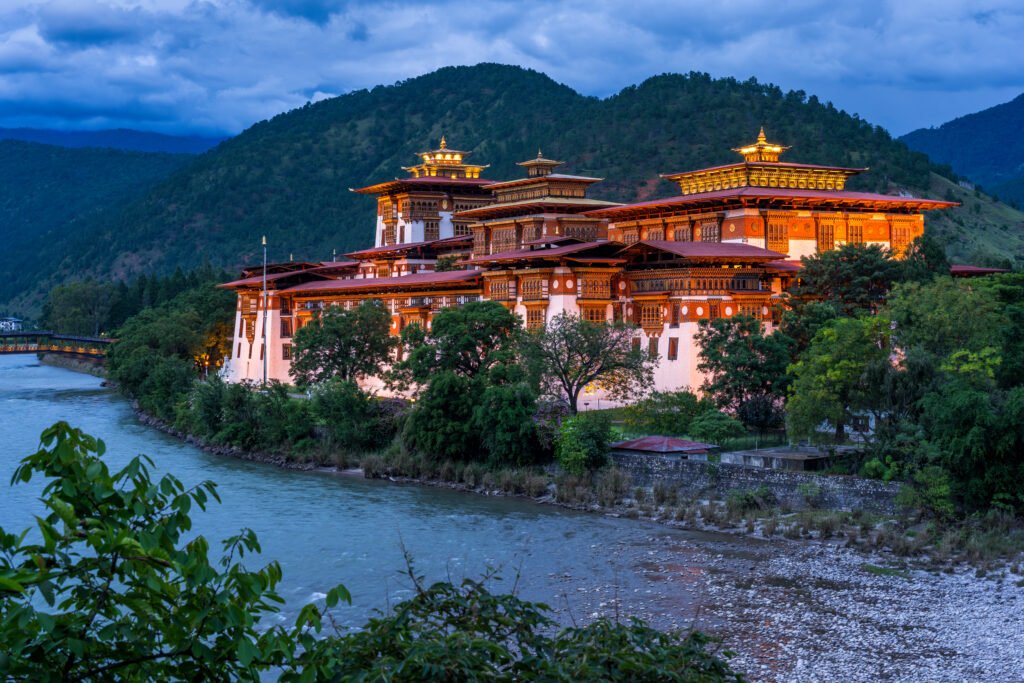
Descend through changing forest into the warm, green Punakha Valley, almost 2,000 metres lower, where rice terraces line the rivers. Visit Punakha Dzong, one of Bhutan’s most beautiful fortresses, built in 1637 at the confluence of the Pho Chhu and Mo Chhu. The riverbanks around the dzong are a good place to look for birds such as river lapwings and, with luck, the rare white-bellied heron, which lives along Bhutan’s rivers.
Day05
OvernightPhobjikha
Punakha to the Phobjikha Valley
Drive through lush forests to Phobjikha, about three hours from Punakha, climbing from the warm valley past Wangdue Phodrang into the cool highlands of the Black Mountains. The changing forest along the way, from broadleaf to oak and then pine and rhododendron, shows the remarkable range of habitats in a short distance.
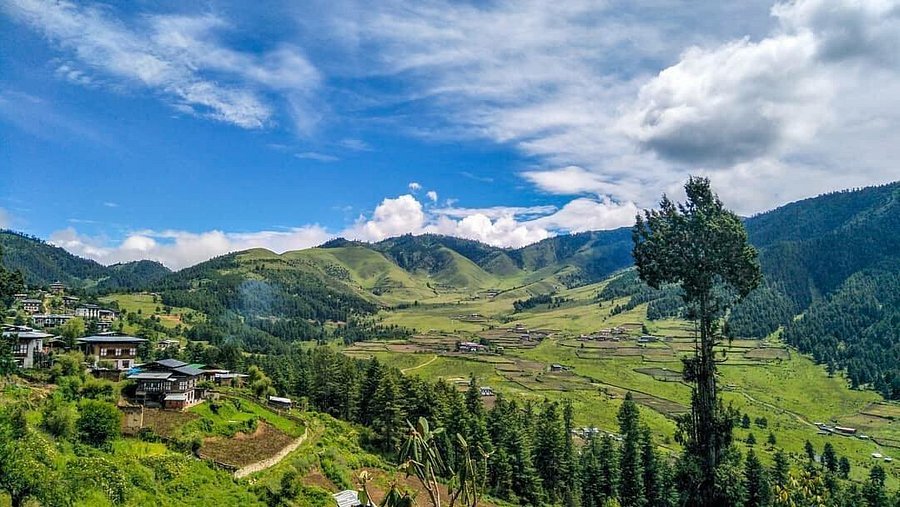
Phobjikha is a broad glacial valley and the winter home of the endangered black-necked cranes, which arrive from the Tibetan plateau in late October and stay until February. Visit the crane observation and information centre, run by the Royal Society for Protection of Nature, where telescopes allow you to watch the cranes without disturbing them and displays explain their ecology and migration. Then visit Gangtey Monastery, the 17th-century monastery on the ridge above the valley.
Day06
OvernightPhobjikha
Phobjikha nature exploration
Begin with a morning birdwatching walk around the edges of the wetland, when birds are most active. In winter, black-necked cranes feed in the marshes, and the valley is also home to other species, including raptors, finches and waterbirds, so the walk can be rewarding at any time of year. Your guide will keep to paths that avoid disturbing the cranes’ feeding and roosting areas.
Later, visit community-run projects that support sustainable tourism and wildlife protection in the valley. The people of Phobjikha have worked with conservation organisations to balance farming with protecting the cranes’ habitat, including keeping overhead power lines out of the valley. Learning how local communities benefit from conservation offers an insight into Bhutan’s approach to the environment, which is written into its constitution.
Day07
OvernightTrongsa
Phobjikha to Trongsa
Drive through the mountains to Trongsa, Bhutan’s historical heart, crossing Pele La, at around 3,400 metres, the pass through the Black Mountains that divides western from central Bhutan. The forests along the pass are home to birds and occasionally yaks grazing near the road. On the descent, stop at Chendebji Chorten, an 18th-century stupa built in the style of Kathmandu’s Swayambhunath.
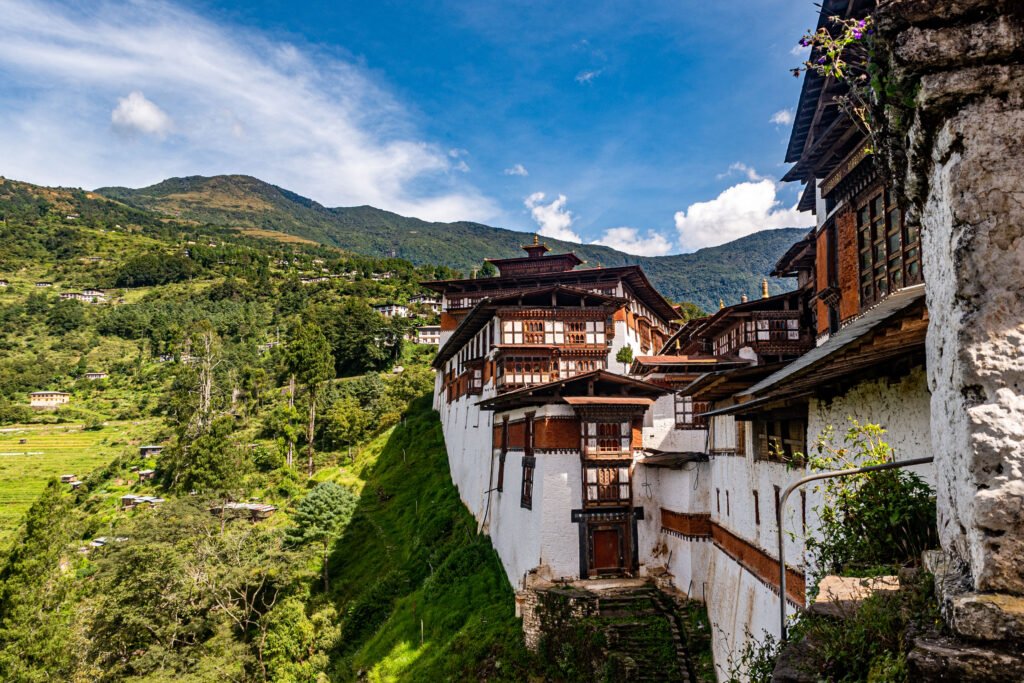
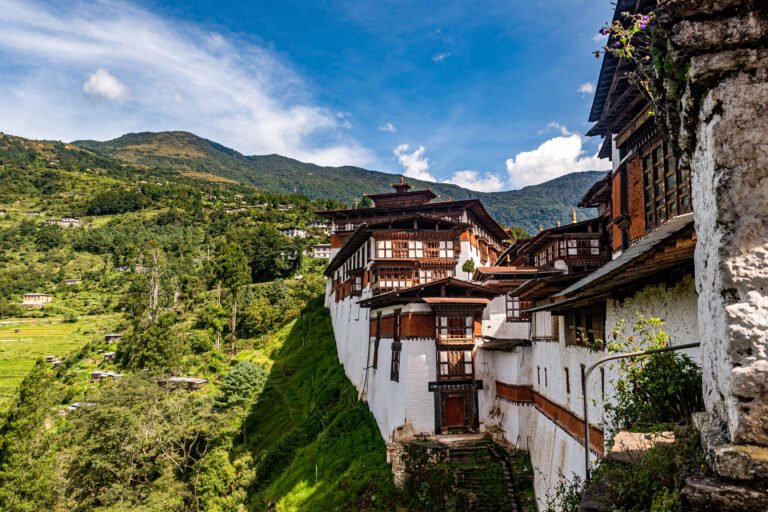
In Trongsa, visit Trongsa Dzong, which stretches along a ridge above the deep gorge of the Mangde Chhu, and learn about its links to Bhutan’s monarchy: the Wangchuck family governed from here as Penlops of Trongsa before becoming kings in 1907, and the crown prince still traditionally holds the title. The views from the town across the gorge to the dzong are spectacular, especially in the evening light.
Day08
OvernightBumthang
Trongsa to Bumthang
Journey to Bumthang, Bhutan’s spiritual and ecological heartland, about two and a half hours by road. The drive climbs over Yotong La, at around 3,400 metres, through forests of fir and rhododendron, before descending into the Chumey Valley, the first of Bumthang’s four valleys.
Stop in the Chumey Valley to see local wool weaving. Chumey is known for yathra, a thick woollen cloth woven in bright patterns and used for jackets, blankets and bags, and you can watch weavers at work and buy directly from them. Continue over a low pass into the Chokhor Valley and the town of Jakar. Bumthang’s open valleys of buckwheat and potato fields, framed by forested hills, feel very different from the steep valleys of the west.
Day09
OvernightBumthang
Bumthang nature and heritage tour
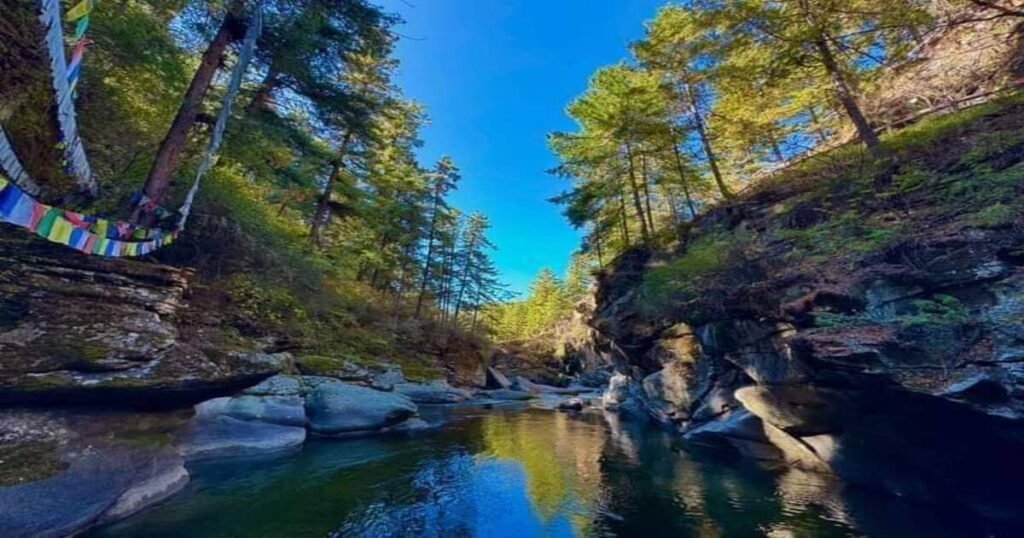
Explore the Ura Valley, the highest of Bumthang’s four valleys, rich in alpine flowers in spring and summer and in birdlife. The drive from Jakar climbs through forest to the open valley, where the village of Ura, with its stone houses clustered closely together and its temple, sits among fields and pastures.
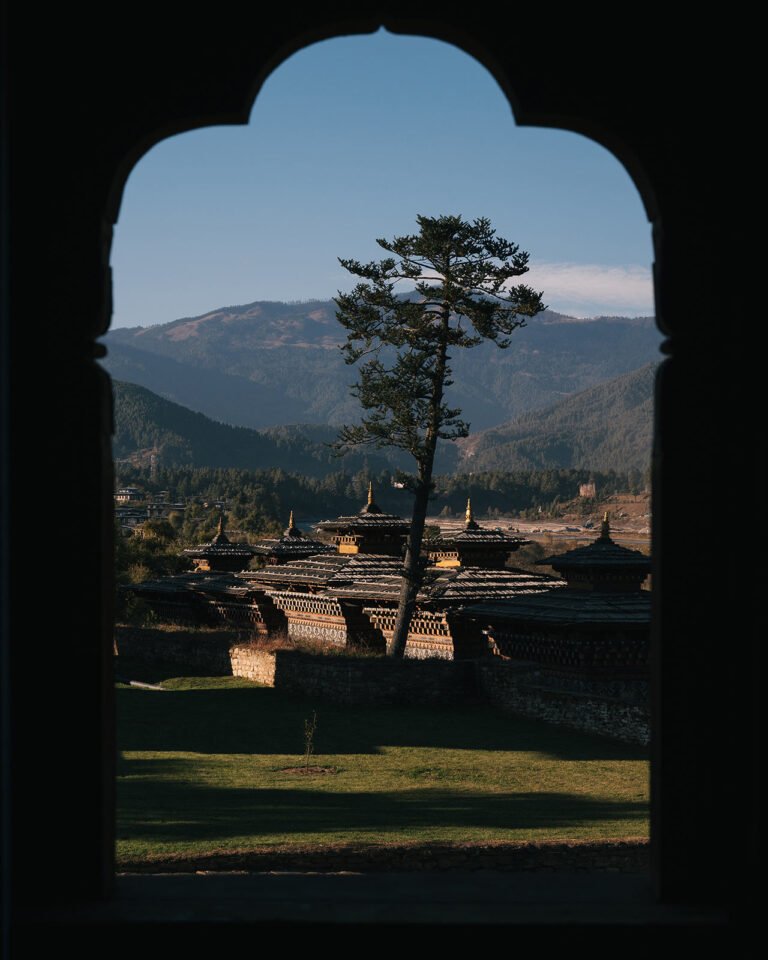
Return to the Chokhor Valley to visit Jakar Dzong, the “castle of the white bird”, which overlooks the valley, and Kurjey Lhakhang, one of the most sacred sites in Bhutan, where Guru Rinpoche is said to have left the imprint of his body in a rock while meditating. Its three temples, surrounded by 108 chortens and old trees, are set against forested hills. The combination of nature and sacred heritage captures the character of Bumthang.
Day10
OvernightZhemgang
Bumthang to Zhemgang
Today’s drive of around five hours descends from the cool highlands of Bumthang into the subtropical forests of Zhemgang, as landscapes shift dramatically along the way. The road passes through Trongsa and then follows the valley of the Mangde Chhu south, dropping through oak and pine into dense broadleaf forest, bamboo and tree ferns.
This is one of the best routes in Bhutan for wildlife along the road. Keep watch for golden langurs, a beautiful monkey found only in this region of Bhutan and neighbouring Assam, which are often seen in the trees around Tingtibi, as well as hornbills and colourful butterflies. Stops along the way allow time for birdwatching and photography. The town of Zhemgang sits on a ridge above the river, in one of the least visited districts of the country.
Day11
OvernightLodge in the Manas area
Royal Manas National Park expedition
Today you enter Royal Manas National Park, Bhutan’s oldest protected area, first established in 1966, which adjoins India’s Manas National Park and protects tropical and subtropical forests and grasslands. It is one of the most biodiverse areas in the eastern Himalaya, home to Asian elephants, tigers, gaur, golden langurs and hundreds of bird species.
The original itinerary describes activities including guided wildlife excursions by boat and vehicle, birdwatching for hornbills, peafowl and eagles, and visits to ranger stations and villages in the buffer zone. Large mammals are present but rarely seen, while birds and primates are much more likely. The original plan also mentioned spending three full days in the park, while the itinerary lists one day here; the final length is still being confirmed, and we will set it with you when you enquire.
Day12
OvernightGelephu
Royal Manas to Gelephu
Drive to Gelephu, Bhutan’s southern gateway, a town on the plains bordering the Indian state of Assam. The route passes through the forested foothills, where the climate becomes increasingly tropical and the landscape opens out towards the plains.
Gelephu has a warm lowland climate quite unlike the highlands, with palm trees, rice fields and a busy border market, and it is one of the main overland entry points into Bhutan. It is also the site of one of Bhutan’s two international airports and of an ambitious new development project. Relax in the afternoon and enjoy the warm weather after the cooler days of the highlands. Your guide can show you around the town and explain the role of the south in Bhutan’s economy and culture.
Day13
OvernightTrongsa
Gelephu to Trongsa
A scenic drive back north to Trongsa through winding mountain roads and lush valleys. The road climbs from the plains through subtropical forest and up the valley of the Mangde Chhu, passing through Zhemgang district again, and the gradual change of vegetation as you gain height is fascinating to watch.
It is a long day on the road, with stops for meals, views and birdwatching along the way, and another chance to look for golden langurs and hornbills in the forests around Tingtibi if you missed them on the way south. Arriving in Trongsa in the evening, the view across the gorge to the great dzong, lit up against the dark hillside, is a fine welcome back to central Bhutan before the journey west tomorrow.
Day14
OvernightParo
Trongsa to Paro
Return to Paro today. The original itinerary offers flying or driving: Trongsa has no airport, so a flight would mean driving first to the domestic airport at Bathpalathang in Bumthang, depending on schedules, while driving west means a long and scenic day over Pele La, past Wangdue Phodrang and over Dochula Pass, through Thimphu to Paro.
We will confirm the best option for your dates when you book. On arrival in Paro, enjoy local handicraft shopping along the town’s main street, with its painted wooden shopfronts, or simply rest at your hotel after the long journey. If the weather is clear on the drive, the views from the passes over the forests you have explored during the journey make a memorable recap of your time in Bhutan.
Day15
OvernightParo
Hike to Tiger's Nest Monastery
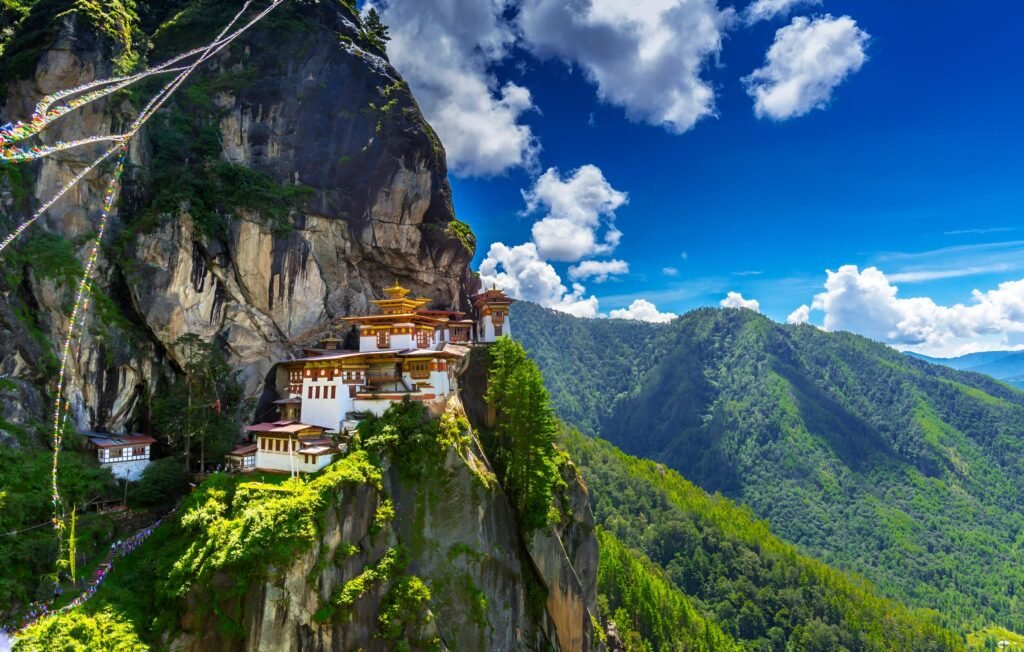
Set off early for the hike to Taktsang, the Tiger’s Nest Monastery, Bhutan’s most iconic site, perched on a cliff about 900 metres above the Paro Valley. According to legend, Guru Rinpoche flew here on the back of a tigress in the 8th century to meditate in a cave around which the monastery was later built.
The trail climbs through blue pine forest hung with prayer flags, a fitting final nature walk, and the forest is good for birds such as the white-collared blackbird and various tits and finches. There is a café and viewpoint about halfway, and most visitors take two to three hours to reach the monastery. In the evening, relax with a traditional hot stone bath, heated with river stones, at the end of your journey through Bhutan’s wild places.
Day16
Depart from Paro
After breakfast, your guide transfers you to Paro International Airport for your onward flight. If time allows, take a final walk along the river or stop at a viewpoint above the valley for a last look at Rinpung Dzong and the forested ridges.
As your flight climbs out of the valley, look out for the high peaks on clear days, and perhaps reflect on how much of the country you have seen, from the crane wetlands of Phobjikha and the highlands of Bumthang to the subtropical forests of Zhemgang and Royal Manas. Bhutan’s commitment to conservation, with most of the country still under forest, is one of its most remarkable achievements. At the airport your guide bids you farewell with a warm “Tashi Delek”.
Good to know
- Private journeyPlanned around your dates, pace and interests
- GuideA licensed Bhutanese guide accompanies you throughout, as Bhutan requires
- ArrivalParo International Airport
- PriceDepends on dates, hotel category and group size; our prices include the government’s Sustainable Development Fee
Best time to visit
- October to April: birdwatching and wildlife photography, including black-necked cranes in Phobjikha (November to February).
- March to May: wildflowers, butterflies and mild walking conditions.
- June to August: heavy rain, though the forests are at their greenest.
Travel tips
- Bring good binoculars and a telephoto lens
- Consider extra time in Royal Manas for deeper wildlife watching
- Walk clockwise around chortens and keep noise low in wildlife areas
- Book early for the crane season, November to March
Places on this route
Paro
Western Bhutan
Thimphu
Western Bhutan
Punakha
Western Bhutan
Wangdue Phodrang
Western Bhutan
Trongsa
Central Bhutan
Bumthang
Central Bhutan
Zhemgang
Central Bhutan
Explore more: Nature and wildlife in Bhutan · best time to visit · visa and SDF
You may also like
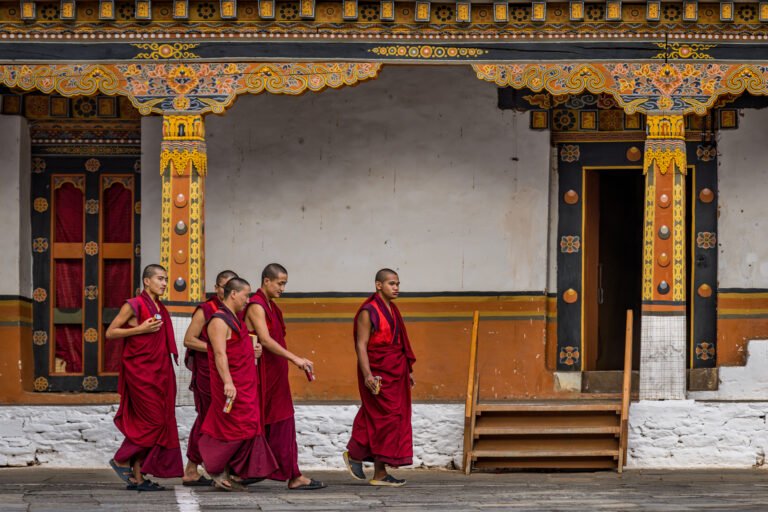
Bhutan Himalayan Odyssey
6 days. Paro, Thimphu and Punakha, with the hike to Tiger's Nest.
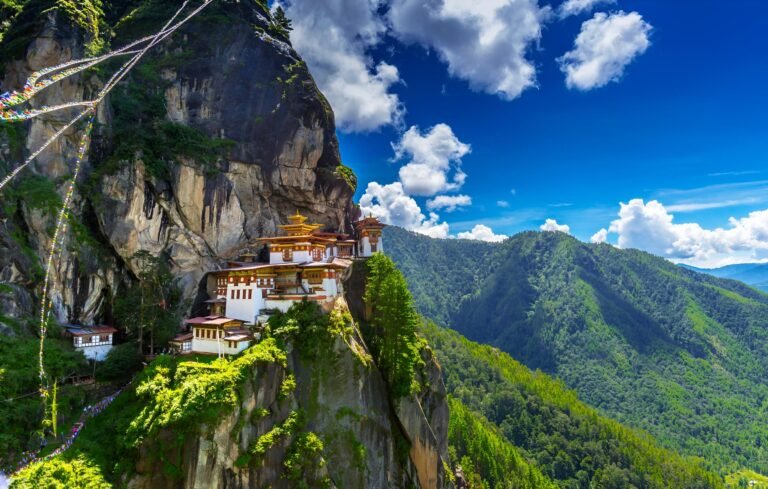
Bhutan Himalayan Journey
7 days. The western valleys, Phobjikha and Tiger's Nest.
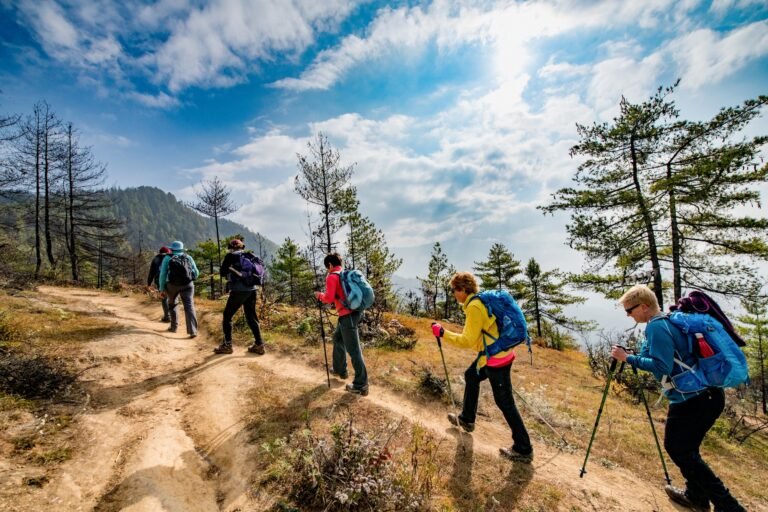
The Ultimate Himalayan Journey
8 days. Western Bhutan with an overnight camp on the Bumdra trek.
Tell us how you would like to travel
Share your dates, interests and preferred pace. We reply personally with ideas for your route and a clear quote.
Prefer to chat? WhatsApp +975 77888822